Drowning in Data, Starving for Insight: The Supply Chain Visibility Trap

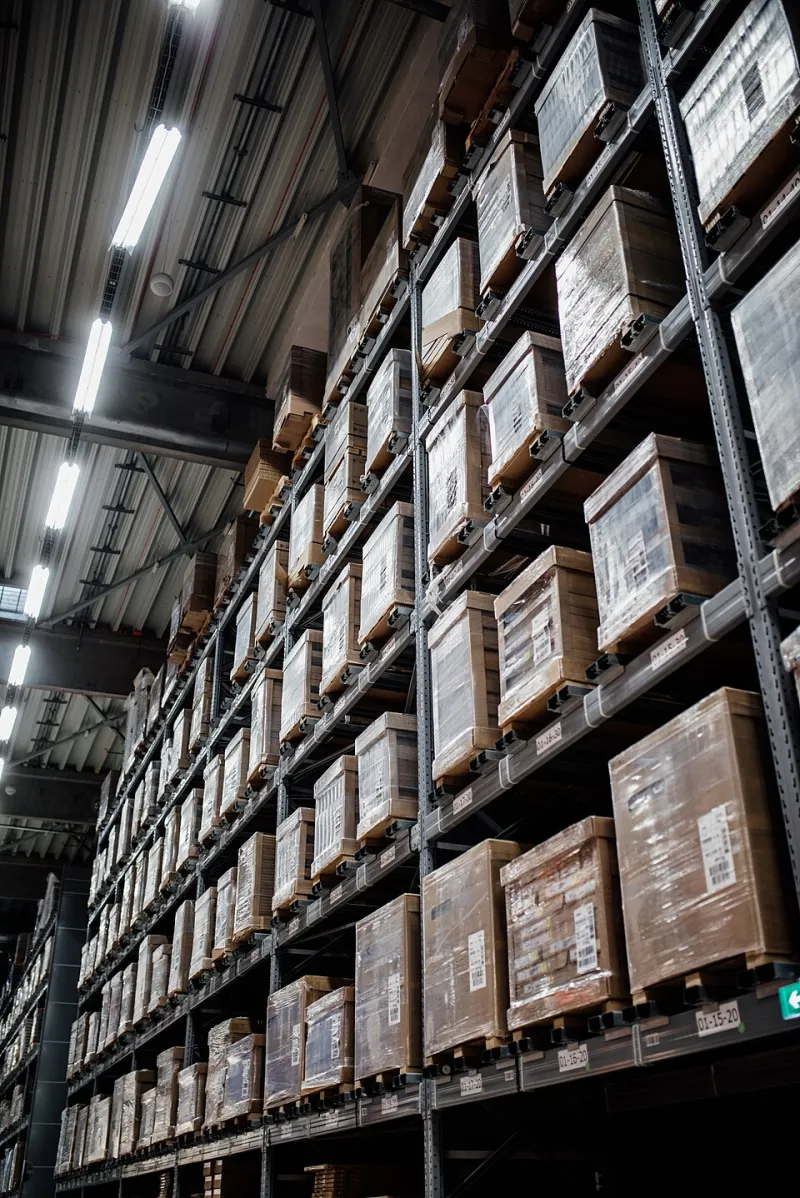
Photo: U.S. Marine Corps photo by Cpl. Apollo Wilson, Public domain, via Wikimedia Commons
For the better part of the last decade, supply chain visibility has been treated as a destination. Organizations have invested in IoT sensors, GPS-enabled freight tracking, control tower platforms, and end-to-end monitoring dashboards with the expectation that more information would naturally produce better outcomes. In many cases, it has not.
The uncomfortable reality facing logistics and operations leaders across the United States is this: visibility without interpretive discipline is not an asset. It is a liability dressed in the language of innovation.
The Promise That Outpaced the Practice
The technology industry has done an exceptional job marketing real-time tracking as a transformative capability. And to be fair, the tools themselves have improved dramatically. Shipment-level granularity, carrier API integrations, predictive estimated time-of-arrival engines, and exception alerting have all matured considerably. The platforms work.
The organizations operating them, however, have not always kept pace.
When a mid-sized consumer goods distributor based in the Midwest undertook an internal audit of its visibility platform usage, the findings were instructive. The company had invested nearly $400,000 over two years in a best-in-class supply chain control tower solution. Yet when analysts examined how frequently the data was accessed, by whom, and what decisions followed, a troubling pattern emerged. The platform was consulted primarily after problems had already escalated — delayed shipments, missed delivery windows, inventory shortfalls. The data was being used to explain failures, not prevent them.
This is the visibility paradox in practice: the very tools designed to move organizations from reactive to predictive management are being used reactively.
Why More Data Points Create More Noise
There is a cognitive dimension to this problem that rarely appears in vendor pitch decks. Human decision-makers — even experienced logistics professionals — have finite capacity for processing concurrent signals. When a dashboard surfaces 47 exception alerts on a Tuesday morning, the operational response is almost invariably triage: address the loudest alarms and defer the rest.
The alerts that get deferred are frequently the ones that matter most. A shipment running two hours behind schedule on a Tuesday may be irrelevant in isolation. That same shipment, viewed in the context of a downstream production schedule, a regional weather pattern developing over the next 72 hours, and a supplier with a known history of Thursday delivery failures, represents a material risk. But that contextual synthesis rarely happens in real time, because the data exists in fragments across multiple systems and no one has been assigned the explicit responsibility of connecting them.
The result is an organization that is perpetually informed but rarely prepared.
The Architecture of Actionable Intelligence
Companies that have successfully closed the gap between data collection and strategic decision-making share a common structural trait: they have separated the function of monitoring from the function of interpretation.
In practical terms, this means that someone — or some team — is not simply watching shipment status updates. They are asking a different category of question entirely. Not "where is this load right now?" but "what does the current pattern of signals tell us about what will happen in the next 48 hours, and what should we do before it does?"
A regional food and beverage manufacturer operating distribution centers across the Southeast restructured its logistics analytics function along precisely these lines. Rather than routing all visibility data to a centralized operations team that was already managing day-to-day execution, the company created a small dedicated unit — three analysts — whose sole mandate was forward-looking signal interpretation. They were explicitly prohibited from managing active exceptions. Their job was pattern recognition and pre-emptive escalation.
Within 18 months, the company reported a 22 percent reduction in carrier detention charges and a 31 percent decline in expedited freight spend. Neither outcome was the result of new technology. Both were the result of acting earlier, on signals that had always been present but were never systematically interpreted.
The Measurement Problem That Perpetuates the Cycle
Organizations continue to measure visibility investment by the wrong metrics. Platform adoption rates, dashboard login frequency, and the number of integrated data sources are common KPIs. None of them measure what actually matters: the degree to which visibility data influenced a decision before a disruption occurred.
This measurement gap creates a self-reinforcing cycle. Technology teams report high engagement with the visibility platform. Operations leaders believe the investment is performing. And yet freight costs, service failures, and inventory distortions persist at levels inconsistent with the supposed sophistication of the toolset.
Until organizations begin tracking the ratio of predictive interventions to reactive responses — and tying that ratio to measurable cost outcomes — the investment case for visibility technology will remain largely theoretical.
Rethinking the Role of the Control Tower
The control tower concept, borrowed loosely from aviation, was always meant to imply active coordination and pre-emptive guidance, not passive observation. An air traffic controller does not wait for a near-miss to intervene. The entire function is structured around anticipating conflict before it materializes.
Supply chain control towers, as currently deployed in most US organizations, operate more like security camera systems: they record everything and alert when something has already gone wrong. The architectural logic of the tool has been undermined by the operational culture surrounding it.
Reorienting that culture requires deliberate organizational design. It requires clearly defined decision rights — specifying exactly who is authorized to act on a given signal, within what timeframe, and with what level of approval. It requires integration between visibility platforms and planning systems, so that a flagged exception automatically surfaces the relevant downstream implications rather than existing in isolation. And it requires executive sponsorship that treats supply chain intelligence as a strategic input, not an operational convenience.
The Competitive Divide Is Widening
The organizations that will define supply chain excellence over the next five years are not those with the most data. They are those that have developed institutional competency in converting data into foresight. That distinction is not a technology question. It is a strategy question.
For logistics and operations leaders evaluating their current visibility posture, the most valuable diagnostic is not a platform assessment. It is an honest accounting of how many times, in the past quarter, your organization acted on a supply chain signal before a problem became a crisis — and how many times the data was only consulted after the damage was done.
The answer to that question will tell you more about your competitive position than any dashboard ever will.