Bigger Is Not Always Better: Rethinking the Logistics Partner You Chose for Convenience
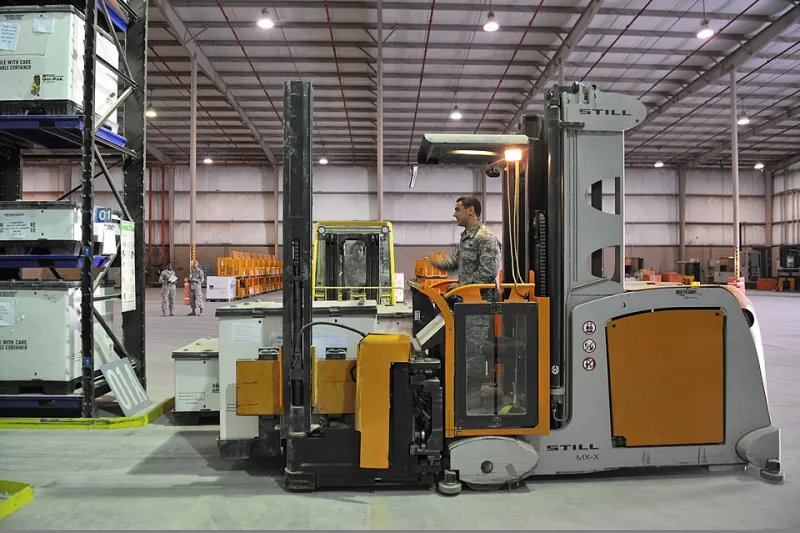
Photo: MSgt David Miller, Public domain, via Wikimedia Commons
The Comfort of Scale
There is an understandable logic to choosing a large logistics provider. The brand recognition inspires confidence in boardrooms. The global network maps look reassuring in vendor presentations. The account team arrives with polished decks and credentialed professionals. And when something goes wrong — which it will — there is a certain comfort in knowing you are working with an organization large enough to absorb the problem.
But comfort and optimization are not the same thing. And for a growing number of U.S. manufacturers, distributors, and retailers, the decision to default to a top-tier mega-carrier has quietly become one of the more expensive strategic conveniences in their operating model.
This article is not an argument against large logistics providers categorically. It is an argument for asking harder questions about whether the provider you selected three or five years ago — possibly during a period of rapid growth, a merger, or a procurement consolidation initiative — is still the right structural fit for your business today.
What Scale Actually Delivers — and What It Does Not
Large logistics providers deliver genuine advantages in specific contexts. Global freight forwarding, high-volume parcel delivery, and complex multi-modal shipments that span continents are domains where network scale creates real value. If your supply chain regularly moves containers from Southeast Asia to the U.S. Gulf Coast and then distributes to 3,000 retail locations nationally, a mega-carrier's infrastructure is genuinely difficult to replicate.
But most U.S. businesses do not operate at that level of complexity uniformly. They have regional concentrations, specialized freight categories, and operational rhythms that do not map neatly onto the standardized service tiers that large providers have built for maximum throughput efficiency.
This is where scale becomes a liability rather than an asset.
Large logistics organizations are optimized for volume and standardization. Their systems, pricing models, and service protocols are designed to handle millions of shipments efficiently — which means they are designed to handle your shipments the same way they handle everyone else's. Customization is possible, but it requires navigating internal bureaucracy, escalating to account management tiers that may or may not prioritize your account, and waiting for system updates that move on enterprise-wide development cycles.
A mid-size regional carrier or a specialized 3PL serving your specific vertical does not have this problem. They are optimized for your type of freight, your geography, and your operational cadence — because that is the entirety of their business model.
Case Evidence From the Field
Consider a mid-size industrial components distributor operating primarily across the Midwest and Southeast. For several years, the company maintained a national contract with one of the largest U.S. carriers, drawn by the promise of consistent service and consolidated billing. What the company discovered during a strategic logistics review was that its on-time delivery performance in secondary markets — smaller metros in Tennessee, Arkansas, and Missouri — was running 11 percentage points below its primary market performance. The mega-carrier's network density in those areas was insufficient, and the company was effectively subsidizing a national contract for service that was not nationally consistent.
After transitioning to a regional carrier with deep presence in the Southeast and a specialized 3PL for Midwest industrial freight, on-time delivery improved across both regions, and the blended freight cost declined by approximately 8 percent annually. The national contract had felt like simplicity. The specialized structure delivered results.
A similar pattern appears in temperature-controlled food distribution, where mid-size regional cold chain operators consistently outperform national carriers on spoilage rates and compliance documentation for FSMA-regulated shipments. The specialized operators have built their entire infrastructure around the regulatory and operational demands of food logistics. The mega-carriers have built a cold chain division within a much larger generalist organization.
The Accountability Gap
One of the most consistent complaints from companies operating under large logistics contracts is the accountability gap — the distance between where a problem originates and where decision-making authority actually resides.
When a shipment is delayed, damaged, or misrouted, the process of resolving it within a large provider's structure can be genuinely slow. Escalation paths are long. Service credit processes are bureaucratic. And the account representative who sold you the contract may have limited authority to actually fix operational issues in real time.
With a mid-size or specialized provider, the organizational hierarchy is shorter. The operations manager is often directly accessible. The owner of the company may be reachable by phone. This is not a minor cultural difference — it is a structural advantage that translates directly into faster problem resolution, more responsive service adjustments, and a relationship where your account represents a meaningful percentage of the provider's revenue rather than a rounding error.
A Diagnostic Framework for Your Current Partnership
Before concluding that your logistics provider is or is not the right fit, consider evaluating your current arrangement against four dimensions.
Geographic performance consistency. Does your provider deliver comparable service quality across all of your operating markets, or does performance degrade in secondary regions? Request lane-level on-time data, not aggregate statistics.
Customization responsiveness. How long does it take to implement a meaningful change to your service protocol — a new delivery window, a revised labeling requirement, a modified pickup schedule? The answer reveals how much operational flexibility you actually have.
Innovation access. Is your provider introducing technology and process improvements relevant to your industry, or are you receiving generic platform updates designed for the broadest possible customer base? Specialized operators typically innovate faster within their niche.
True cost of the relationship. Beyond the freight invoice, calculate the internal labor cost of managing exceptions, disputes, and escalations. A lower rate with a high exception rate may cost more than a higher rate with a low one.
The Strategic Conclusion
The right logistics partner is not the largest one available. It is the one most precisely aligned with the operational demands, geographic footprint, and service standards of your specific business model. That answer will be different for every organization — and it will likely change as your business evolves.
The companies that revisit this question regularly, with honest data and clear performance benchmarks, consistently outperform those that treat logistics partnership as a procurement decision made once and renewed automatically.
Size is a feature. It is not a strategy.