Reshoring Reality Check: The Hidden Costs That Derail Domestic Manufacturing Strategies

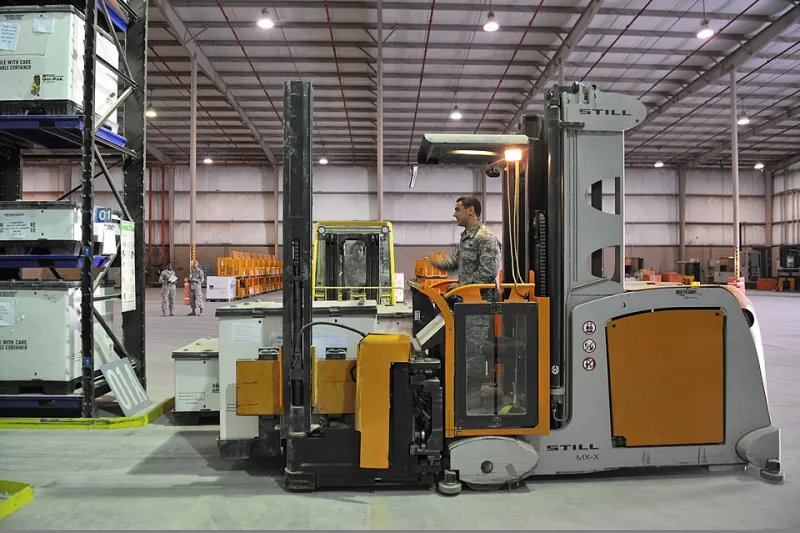
Photo: White House photo by Paul Morse, Public domain, via Wikimedia Commons
The Appeal and the Illusion
Few strategic narratives have captured the attention of American business leaders quite like reshoring. After the supply chain disruptions of 2020 and 2021 exposed the fragility of extended global networks, the logic seemed straightforward: bring manufacturing home, reduce dependency on overseas suppliers, and reclaim control over production timelines. Government incentive programs, favorable political rhetoric, and genuine operational frustration with overseas vendors added momentum to this movement.
Yet for a significant number of companies that have pursued reshoring initiatives over the past three years, the financial outcomes have been sobering. Cost overruns, operational delays, and infrastructure gaps have transformed what appeared to be a strategic advantage into a prolonged drain on capital. The problem, in most cases, was not the decision to reshore — it was the incomplete strategic framework used to evaluate whether reshoring was the right move in the first place.
Labor Is Only the Beginning
Most reshoring cost analyses begin and end with labor. Executives compare wage rates in their current offshore locations against projected domestic payroll expenses, apply a multiplier for benefits and compliance, and arrive at a figure that either pencils out or does not. This methodology is dangerously incomplete.
Labor represents, depending on the industry, between 15 and 35 percent of total manufacturing cost. The remaining costs — and the ones most likely to surprise companies mid-transition — fall into several categories that rarely receive adequate scrutiny during the planning phase.
Infrastructure gaps are among the most underestimated expense categories. Many US manufacturing facilities that went dormant over the past two decades require substantial capital investment before they can support modern production standards. Electrical systems, HVAC capacity, loading dock configurations, and digital infrastructure may all require upgrades. In some regions, the available industrial real estate simply does not meet contemporary requirements, forcing companies to consider ground-up construction — a process that adds 18 to 36 months and significant cost before a single unit rolls off the line.
Supply chain rebuilding presents a parallel challenge. A company that has sourced components from Asian suppliers for a decade cannot simply redirect those purchase orders to domestic vendors overnight. In many component categories, domestic suppliers either do not exist at scale or carry lead times and minimum order quantities that disrupt the production planning assumptions the company built its reshoring model upon. Rebuilding a domestic supplier network is a multi-year effort that requires procurement investment, supplier development resources, and tolerance for early-stage quality variability.
The Workforce Development Problem
The American manufacturing workforce has contracted significantly over the past 30 years. Skilled trades — precision machining, tool and die, industrial electrical — face genuine talent shortages in many regions. Companies returning production to the United States frequently discover that the local labor market cannot supply the specialized skills their operations require at the volume needed.
This creates a compounding cost dynamic. Companies must either invest in internal training programs — a slow and expensive process — or recruit nationally and relocate workers, which introduces relocation packages, housing allowances, and retention risk into the financial model. Neither option is reflected in a simple wage rate comparison.
Regulatory compliance adds another layer of complexity that offshore operations, managed at arm's length, tend to obscure. Environmental permitting, OSHA compliance, zoning requirements, and state-level manufacturing regulations vary considerably across the country. Companies unfamiliar with the regulatory environment of their chosen location can encounter permitting delays and compliance costs that were absent from the original business case.
A Framework for Honest Evaluation
None of this is an argument against reshoring. For certain industries and certain company profiles, domestic production is the correct strategic decision. The goal is to evaluate that decision with precision rather than optimism.
A rigorous reshoring assessment should address four dimensions:
Total landed cost modeling must extend beyond direct manufacturing costs to include logistics, inventory carrying costs, supply chain risk premiums, and the cost of quality management across a geographically distributed network. Many companies find that when these factors are properly quantified, the cost differential between offshore and domestic production is narrower than assumed — which sometimes makes reshoring more viable, not less.
Phased transition planning reduces exposure significantly. Rather than committing to full domestic production in a single move, companies can reshore selectively — beginning with product lines or components where domestic capabilities are strongest and supply chains are most developed. This approach generates operational learning, builds internal competency, and allows the financial model to be tested against reality before full capital deployment.
Regional market analysis matters more than many executives acknowledge. States and municipalities vary considerably in their manufacturing cost environments, incentive structures, workforce availability, and infrastructure quality. A reshoring strategy that works in the Carolinas may not work in the Northeast, and vice versa. Site selection deserves the same analytical rigor as any capital investment decision.
Strategic alignment testing asks the most fundamental question: does domestic production serve the company's core competitive strategy, or does it simply respond to external pressure? Companies that reshore because they genuinely compete on speed-to-market, product customization, or supply chain responsiveness are better positioned to absorb the transition costs than companies responding primarily to political or public relations considerations.
The Right Move, Done Right
Reshoring is neither inherently wise nor inherently misguided. It is a capital allocation decision that deserves the same analytical discipline applied to any major strategic investment. The companies that have navigated domestic manufacturing transitions successfully share a common characteristic: they entered the process with a comprehensive understanding of what it would actually cost, and they built their business cases on that understanding rather than on the more comfortable numbers.
For US businesses evaluating reshoring in 2024 and beyond, the competitive environment rewards precision. The companies that will benefit most from domestic production are those that treat the transition as a complex strategic initiative — not a political statement or a reactive response to supply chain anxiety — and build the operational infrastructure to support it before the first production run begins.